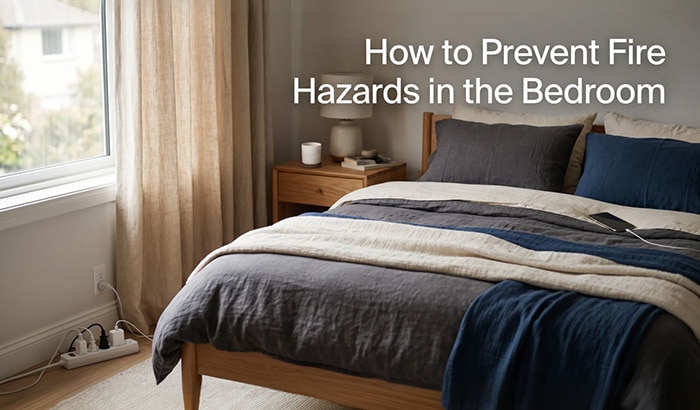
Preventing fire hazards in the bedroom starts with controlling the most common risks: space heaters, candles, overloaded outlets, damaged cords, unsafe charging habits, and missing smoke alarms.
The best fire safety rules include keeping heat sources away from bedding, plugging heaters straight into wall outlets, testing smoke alarms regularly, and closing the bedroom door before sleep.
Why preventing fire hazards matters
Bedrooms should feel safe, but they often hold some of the most overlooked fire risks in the home. A heater too close to a blanket, a charger buried in bedding, or a candle left burning on a nightstand may quickly turn into a serious emergency. That’s why preventing fire hazards in sleeping areas matters so much.
In this guide, you’ll learn practical bedroom-specific fire safety rules, common mistakes to avoid, and the steps that help lower your chance of needing costly fire damage restoration after a home fire. Keep reading to learn more.
What does bedroom fire prevention mean?
Bedroom fire prevention is all about following smart fire safety rules around heaters, candles, cords, charging devices, and alarms. It also means building habits that protect you at night, when a fire may spread before you notice it.
A good prevention plan does two jobs. First, it lowers the odds of a fire starting. Second, it improves your chances of escaping safely if one does start. NFPA states that you should install smoke alarms in each bedroom, outside each sleeping area, and on every level of the home.
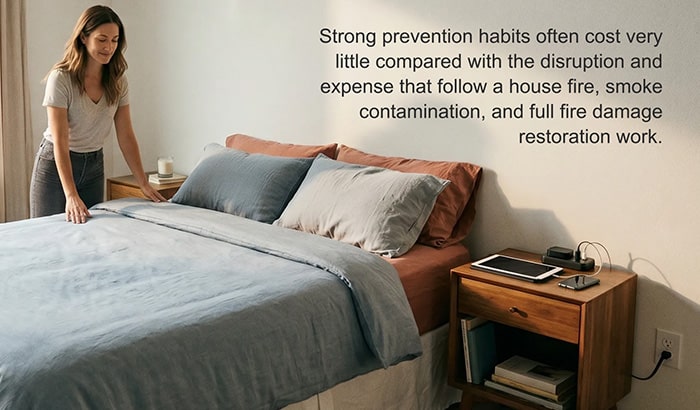
Strong prevention habits often cost very little compared with the disruption and expense that follow a house fire, smoke contamination, and full fire damage restoration work.
Step-by-step guide for preventing fire hazards
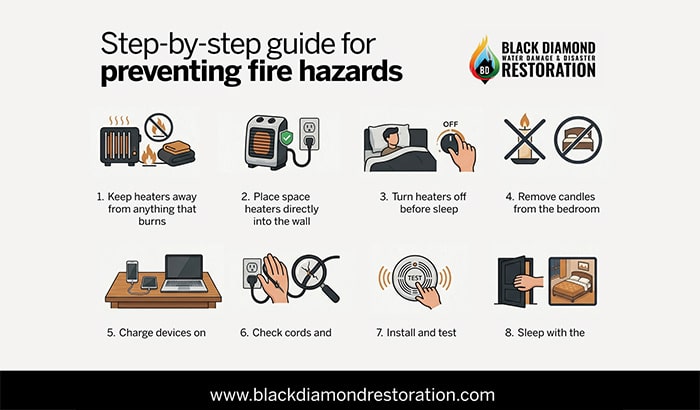
1. Keep heaters away from anything that burns
Space heaters need room. CPSC recommends keeping portable heaters at least three feet from bedding, drapes, furniture, and other combustible materials.
2. Plug space heaters directly into the wall
Never plug a space heater into a power strip or extension cord. CPSC says electric heaters should be plugged directly into a wall outlet to help prevent overload and fire.
3. Turn heaters off before sleep
Don’t leave portable heaters running while you sleep. CPSC recommends turning them off before bed. If you rely on a heater to warm the room, warm the space first, then shut it off before you fall asleep.
4. Remove candles from the bedroom
Candles create unnecessary risk in a room filled with blankets, pillows, curtains, and upholstered furniture. NFPA reports that two out of every five candle fire deaths happened in the bedroom, and many candle fires start because something that burns was too close to the flame.
5. Charge devices on a hard, open surface
Don’t charge phones, tablets, or laptops on the bed, under blankets, or under a pillow. Charging devices generate heat, and heat trapped in soft materials increases the risk.
6. Check cords and outlets
Replace frayed cords, loose plugs, scorched chargers, or outlets that feel hot. Don’t run cords under rugs, under the bed, or behind pinched furniture. Heat and damage build quietly in those spots.
7. Install and test smoke alarms
Put smoke alarms inside each bedroom, outside each sleeping area, and on every level of the home. Test them regularly and replace batteries or units when needed. Strong alarm coverage cuts detection time and gives sleeping occupants a better chance to get out.
8. Sleep with the bedroom door closed
FSRI and NFPA both support the idea behind “Close Before You Doze.” A closed bedroom door may slow the spread of smoke, heat, and fire. That small nighttime habit may buy valuable time during an emergency and may reduce the damage that later requires major fire damage restoration.
Why bedroom fire prevention matters
Nighttime fires create a dangerous mix of delayed awareness, rapid smoke spread, and limited reaction time.
You should take bedroom fire prevention seriously because:
- Bedrooms contain bedding, curtains, upholstered furniture, and clothing.
- People often sleep through the earliest signs of danger.
- Space heaters and candles often appear in bedrooms during winter or during nighttime routines.
- Smoke alarms inside and near sleeping areas improve early warning.
- A closed bedroom door may slow the spread of smoke, heat, and fire.
- Smart prevention habits reduce the chance you will need smoke cleanup, repairs, or full fire damage restoration later.
Common mistakes to avoid
- Leaving a heater on overnight
- Using a power strip for a heater
- Burning candles near soft materials
- Ignoring smoke alarm placement
- Charging devices in your bed
- Sleeping with the bedroom door open every night
Data and research insights
Here are a few useful facts that strengthen the case for preventing fire hazards in the bedroom:
- NFPA estimates that U.S. fire departments respond to an average of 5,894 home structure fires started by candles per year.
- NFPA states that candle fires cause an average of 63 civilian deaths, 532 civilian injuries, and $286 million in property damage each year.
- NFPA reports that 40% of candle fire deaths occurred in the bedroom.
- CPSC estimates portable heaters are involved in an average of 1,600 fires, 70 deaths, and 150 injuries annually from 2020 to 2022.
- NFPA says people may have as little as two minutes to escape safely from a home fire.
Recommended tools and products
- Smoke alarms for each bedroom and hallway
- Wall-safe outlet arrangement for heater use
- Cord organizers to keep chargers visible and unpinched
- Battery charger station placed on a hard surface
- Flashlight near the bed for nighttime emergencies
FAQ
How do I prevent fires in the bedroom?
Start with the basics: keep heaters at least three feet away from bedding, plug heaters into the wall, remove candles, charge devices on hard surfaces, and install smoke alarms in each bedroom and outside sleeping areas. Those steps cover the most common bedroom risks.
Are space heaters safe in bedrooms?
They are safer when you use them correctly. Keep them at least three feet from anything that burns, plug them directly into a wall outlet, and turn them off before sleeping. Never use an extension cord or power strip with a heater.
Are candles safe in a bedroom?
Candles create a higher risk in bedrooms because bedding, curtains, and furniture burn easily. NFPA reports that a large share of candle-related deaths occur in bedrooms, so the safest move is to keep candles out of the bedroom.
Where should smoke alarms go near bedrooms?
Install smoke alarms inside every bedroom, outside each sleeping area, and on every level of the home, including the basement. This placement improves early warning and supports faster escape.
Does closing the bedroom door really help in a fire?
Yes. A closed door may slow the spread of smoke, heat, and fire, improving survivability and reducing damage inside the room.
Black Diamond Restoration is here to help
Even with following fire safety rules and the best fire hazard prevention, flames sometimes still break out. And fire damage doesn’t stop when the flames are out. Smoke, soot, odor, and hidden structural damage may continue to affect your property long after the initial emergency. If a fire has impacted your home or business, turn to Black Diamond Restoration for fast, dependable help.
Our team provides professional fire damage restoration services with the urgency, care, and experience your property needs. From emergency cleanup to full restoration, we work hard to help you recover quickly and restore safe, usable conditions. Contact Black Diamond Restoration today.