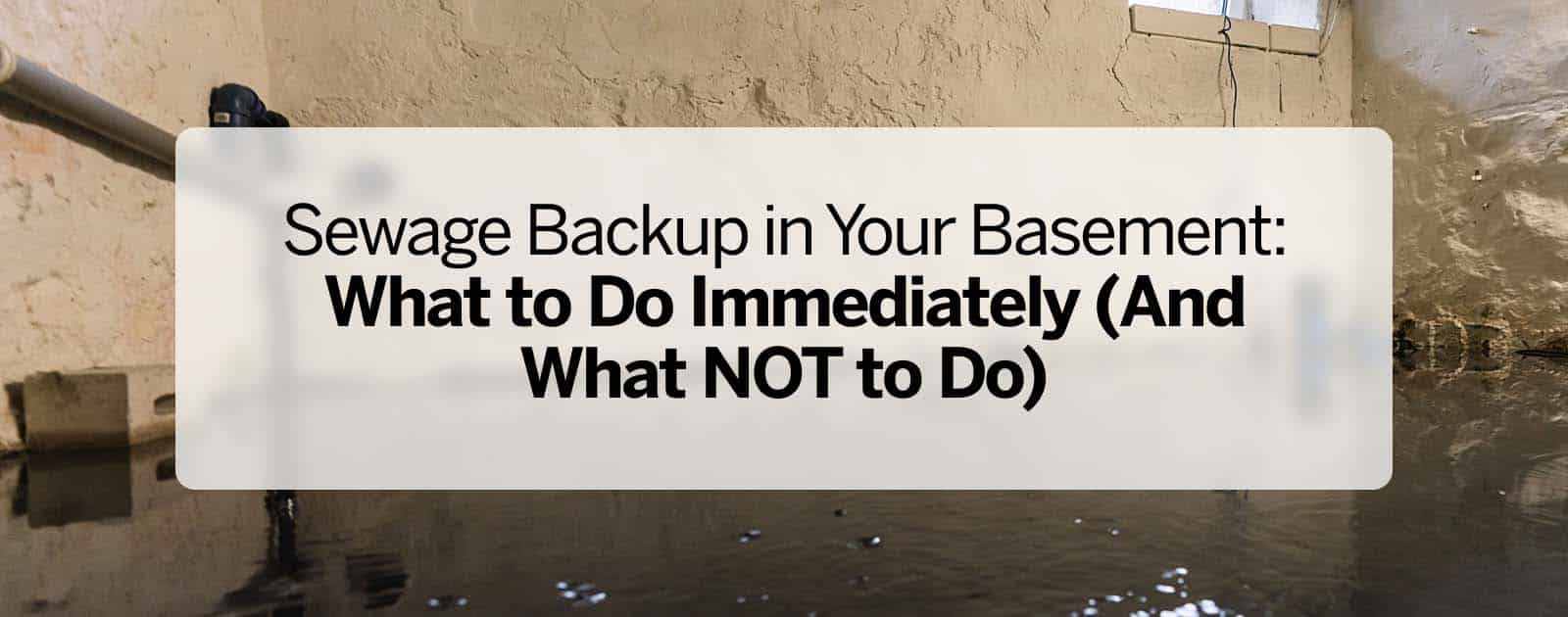
One minute, your basement is dry; the next, you’re standing at the top of the stairs staring at standing water that definitely didn’t come from a burst pipe. A sewage backup is one of the most stressful things a Utah homeowner has to face because of what’s in that water. Raw sewage carries bacteria, viruses, and parasites that pose real health risks within hours.
This guide walks you through the following:
- Exactly what to do the moment you discover this kind of damage,
- The mistakes to avoid
- Why calling in professional sewage cleanup and restoration experts fast makes all the difference
Keep reading for all the info you need.
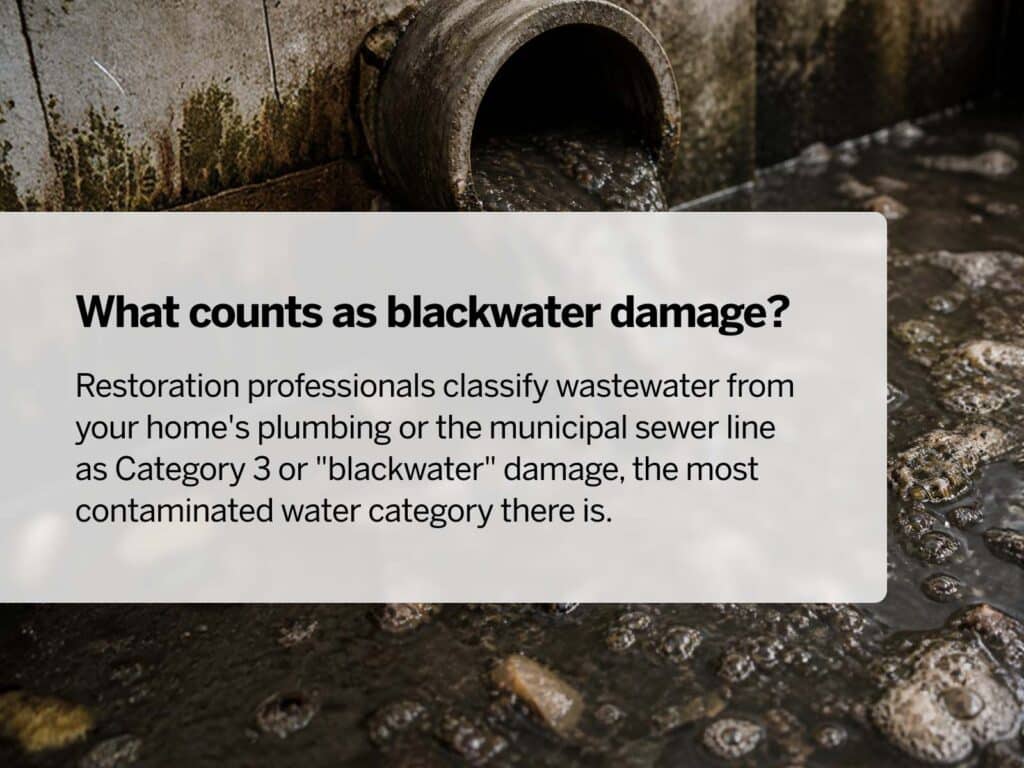
What counts as blackwater damage?
A sewage backup happens when wastewater from your home’s plumbing or the municipal sewer line reverses direction and flows back into your house, usually through basement drains, toilets, or floor drains.
Restoration professionals classify this as “Category 3,” or “blackwater,” damage, the most contaminated water category. Unlike a clean water leak, this type of damage contains solid waste, chemicals, and pathogens that make DIY cleanup genuinely dangerous.
Even an inch or two of sewage water like this will likely contaminate drywall and flooring beyond the point of safe salvage, which is why professional sewage cleanup services always start with containment before cleanup begins.
Health risks of sewage exposure
To understand the urgency behind immediately cleaning up after a sewage backup, it helps to know the risks. Your health could be on the line if you don’t respond with urgency. Here’s why:
- Genuine health hazard: Raw wastewater may carry bacteria such as E. coli and Salmonella, as well as viruses and parasites that have the potential to cause gastrointestinal illness within hours of exposure.
- Skin contact risk: May trigger rashes or infections, especially through cuts or open wounds.
- Airborne particles: Released during a backup, these can irritate the eyes, nose, and lungs.
- Higher-risk groups: Children, older adults, and anyone with a compromised immune system face greater danger from even brief exposure.
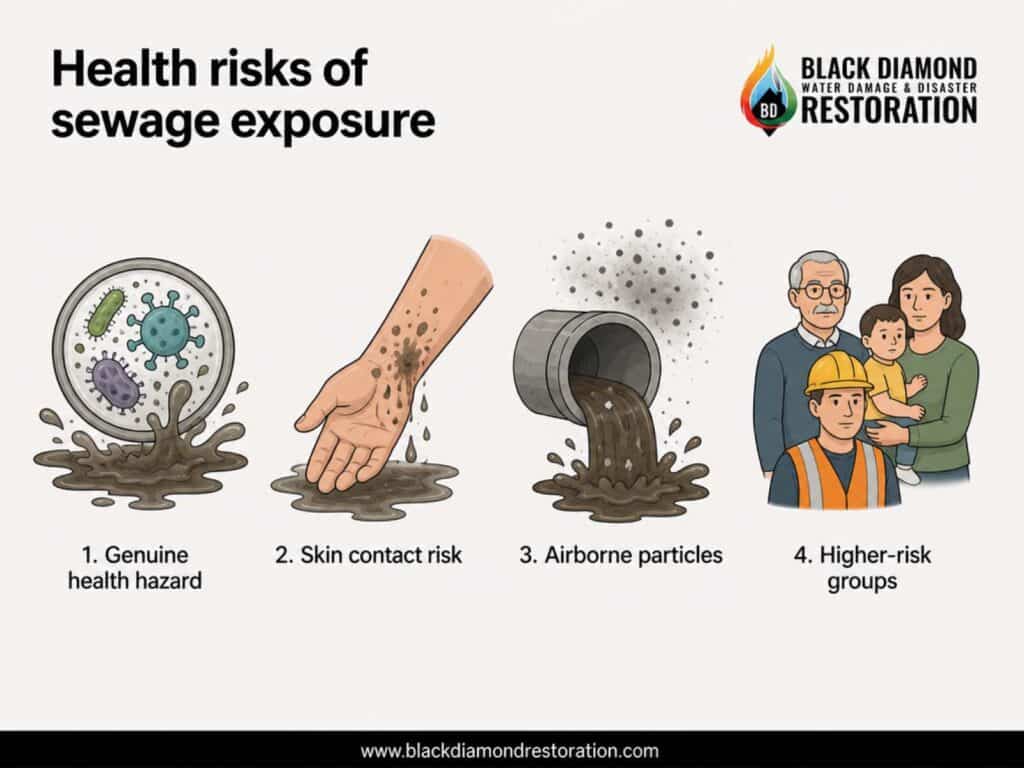
This is exactly why restoration professionals treat every sewage backup as a biohazard event rather than a standard cleanup job. It’s why they use full protective gear, controlled ventilation, and hospital-grade disinfectants. It’s also why quickly calling for sewage cleanup and restoration matters as much for your family’s health as for your home’s structure.
What to do immediately
- Protect yourself first. Stay out of the water if it’s more than ankle-deep, and never enter if you see sparks or smell gas. Keep kids and pets completely out of the area.
- Cut the power if it’s safe to do so. Shut off electricity to the affected area at the breaker box if you can reach it without stepping in water.
- Stop using water in the house. Don’t flush toilets, run showers, or start laundry or the dishwasher. Every extra gallon compounds the problem if the backup is sewer-line-related.
- Ventilate the space. Open windows if you can do so safely to reduce airborne contaminants.
- Document everything. Take photos and video of the water level and affected items before anything is moved or cleaned, for insurance purposes.
- Call a licensed restoration company. Professional sewage cleanup services have the extraction equipment, disinfectants, and protective gear needed to handle blackwater safely. This is something a shop-vac and rubber gloves can’t replicate.
- Contact your insurance provider. Start your claim early; some policies have documentation windows that matter.
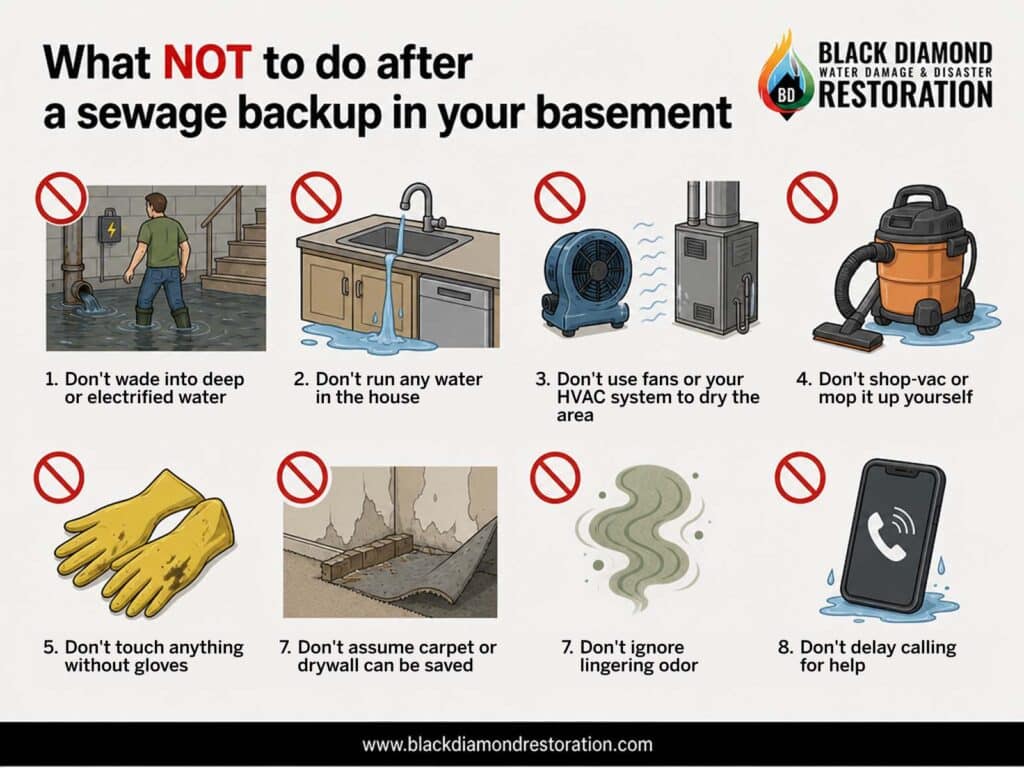
What NOT to do
- Don’t wade into deep or electrified water. Standing water near outlets or submerged appliances is an electrocution risk.
- Don’t run any water in the house until the source of the backup is identified.
- Don’t use fans or your HVAC system to dry the area. This circulates contaminated air throughout your home instead of containing it.
- Don’t shop-vac or mop it up yourself. Standard equipment doesn’t work for blackwater and can spread contamination to other rooms.
- Don’t touch anything without gloves. Pathogens in sewage can enter through cuts, eyes, or your mouth.
- Don’t assume carpet or drywall can be saved. Porous materials that come into contact with blackwater typically require removal.
- Don’t ignore lingering odor after a quick wipe-down. Surface cleaning doesn’t address contamination that’s soaked into subflooring or wall cavities.
- Don’t delay calling for sewage cleanup and restoration. The longer contaminated water sits, the more it spreads, and the more expensive the repairs become.
The numbers behind the damage
- Category 3 water damage (sewage) is considered the most hazardous classification used by restoration professionals, per the Institute of Inspection, Cleaning and Restoration Certification (IICRC) S500 standard.
- The CDC notes that exposure to sewage-contaminated water carries the risk of gastrointestinal illness and skin, eye, and respiratory irritation.
What professional restoration actually involves
Extraction is only the first step. A proper response also includes the following:
- Moisture mapping to detect water that has entered wall cavities or subflooring
- Antimicrobial treatment to prevent bacterial growth before it starts
- Controlled drying using industrial dehumidifiers and air movers
Crews remove and replace any materials that can’t be fully disinfected, rather than drying them in place. This is the difference between a surface-level cleanup and a job that actually protects your home’s air quality and structure in the long term.
FAQ
Q: Is it safe to clean up a small sewage backup myself?
No. Even small amounts of blackwater contain pathogens that pose health risks. Professional sewage cleanup services use containment and disinfection methods that DIY cleaning can’t match.
Q: How quickly should I call for sewage cleanup and restoration?
Immediately. The longer contaminated water sits, the further it spreads into subflooring, drywall, and insulation, increasing health risks and repair costs.
Q: Will homeowners’ insurance cover a sewage backup?
Coverage varies by policy. Many require a separate sewer backup rider. Check your policy and document damage thoroughly before starting a claim.
Q: What’s the difference between water damage and a sewage backup?
This type of loss is classified as Category 3 “blackwater,” the most contaminated tier, while clean water leaks are typically Category 1. This distinction changes the entire remediation approach. Category 1 clean water doesn’t carry the same risks.
Q: How long does sewage cleanup and restoration take?
Timelines vary with the extent of the damage, but most basement backups like this take three to five days for extraction, disinfection, and drying, with longer timelines if materials need to be removed and rebuilt.
Q: What are the early warning signs of a sewage backup?
Gurgling sounds from drains or toilets, slow-draining fixtures, and a persistent sewer odor near basement drains are common early indicators. Catching these signs early can prevent a full backup.
Sewage backup risks in Utah
Older neighborhoods along the Wasatch Front often have aging clay or cast-iron sewer lines prone to root intrusion and collapse, especially near mature trees. Combine that with heavy spring snowmelt saturating the ground around sewer laterals, and Utah homeowners face a higher-than-average risk of backups during March and April. Knowing the signs early can mean the difference between a fast fix and a full basement cleanup.
Don’t wait. Call Black Diamond Restoration now.
A sewage backup is not a wait-and-see situation. The faster you contain it and bring in professional sewage cleanup services, the less it costs you in repairs and health risk.
Every hour of delay gives bacteria more time to multiply and gives contaminated water more time to spread, turning a manageable job into a much larger rebuild.
Black Diamond Restoration provides 24/7 sewage cleanup and restoration for homes throughout the Salt Lake, Utah, and Davis County areas, with technicians ready to respond the moment you call, day or night.
Contact Black Diamond Restoration for emergency sewage cleanup services. We’re available around the clock.