After a house fire, financial help may come from homeowners’ or renters’ insurance, emergency nonprofit support, local 211 programs, FEMA, SBA disaster loans, and tax relief tied to declared disasters.
The fastest path usually starts with filing an insurance claim, documenting the loss, and getting immediate help with shelter, food, and recovery planning while fire damage cleanup and repairs move forward.
A house fire flips life upside down in a matter of minutes. One moment, you’re following your normal routine, and the next, you’re figuring out where to sleep, how to replace essentials, what your insurance covers, and who to call first.
That stress gets even heavier when you also need urgent fire damage cleanup, a trustworthy fire damage repair company, and a real plan for paying the bills that follow.
This guide breaks down the most important financial aid options and support resources available after a fire, including insurance benefits, nonprofit help, government disaster aid, local assistance programs, and practical next steps that make recovery feel more manageable. Keep reading to learn more.
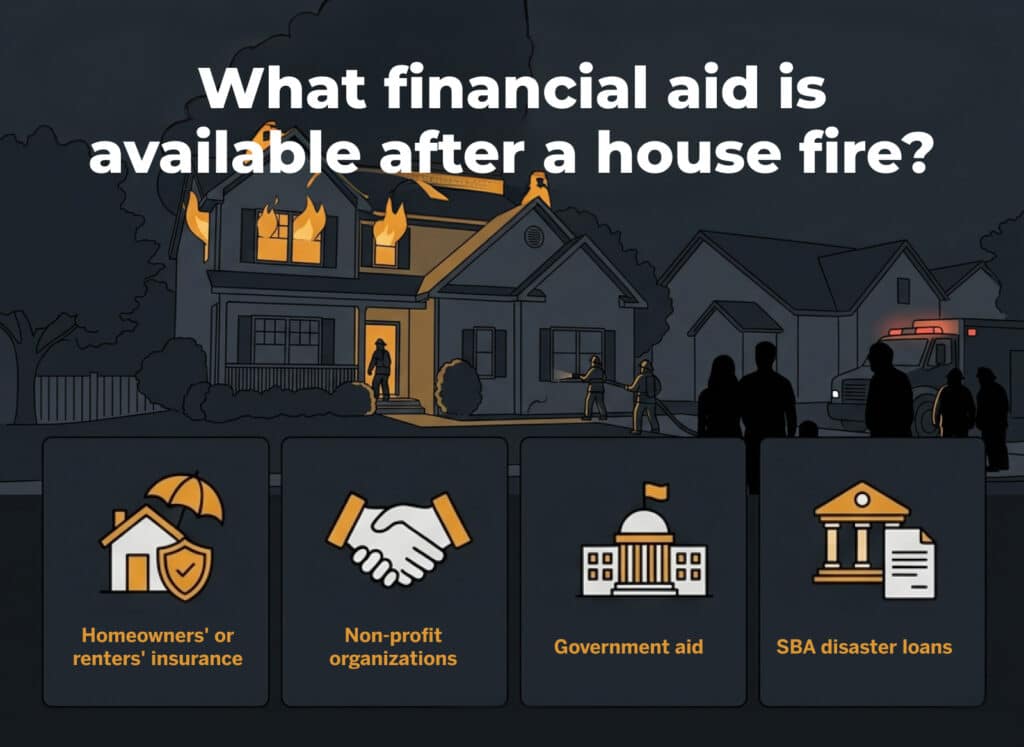
What financial aid is available after a house fire?
House-fire recovery usually draws on funds and support from several sources. Insurance often covers the largest share of the loss, but nonprofit groups, local referral networks, federal disaster programs, and tax relief may all play a role, depending on the situation.
Homeowners’ or renters’ insurance
For many households, the first source of help is homeowners’ or renters’ insurance. NAIC states that standard homeowners’ policies typically cover the dwelling, other structures, personal property, and additional living expenses when a home becomes uninhabitable after a covered fire loss.
Additional living expenses may help you pay for temporary housing, meals, storage, and related costs while contractors restore your home. That support matters whether you are dealing with emergency lodging, a full rebuild, or hiring a team for fire damage restoration.
Non-profit organizations
Nonprofit organizations fill a different but equally important role. The American Red Cross offers disaster recovery guidance and financial recovery support, including steps for insurance, documentation, and immediate post-fire needs.
The Salvation Army provides disaster relief and may help with shelter, clothing, food, and longer-term recovery support in some communities. Those organizations often step in while insurance and contractor timelines are still unfolding.
Government aid
Government aid may also become available, but usually only in specific circumstances. FEMA’s Individuals and Households Program helps eligible people with uninsured or underinsured serious needs after a presidentially declared disaster.
SBA disaster loans
SBA disaster loans may help homeowners and renters in declared disaster areas repair or replace homes and personal property, even if they don’t own a business. That support may help cover costs associated with repairs, rebuilding, and working with a fire damage repair company after a major loss.
Step-by-step recovery and funding process
1. Contact your insurance carrier right away
The Red Cross recommends reporting the damage as soon as possible and documenting the time, place, and manner of its occurrence. Start a list of damaged items, take photos or video, and save receipts for emergency spending. This step helps support your claim and creates the paper trail you may need later for reimbursement or tax records.
2. Ask about additional living expenses
If you can’t stay in the home, ask specifically about hotel costs, rental housing, food, transportation, storage, and laundry. NAIC notes that additional living expense coverage often helps cover the difference between your normal expenses and the extra costs associated with displacement. This is one of the most valuable forms of immediate financial relief after a fire.
3. Call 211 for local help
United Way 211 connects people to local programs for shelter, rent help, utility assistance, food, transportation, and other recovery needs. This is often the fastest way to find city- and county-specific support that won’t appear in a national insurance guide.
4. Contact emergency nonprofits
The Red Cross and The Salvation Army may help with immediate basics like shelter, clothing, food, and guidance after a fire. These resources matter most in the first hours and days, when families often need practical help before insurance money starts moving.
5. Check for FEMA or SBA eligibility
If a declared disaster caused the fire, FEMA and SBA may open related programs.
FEMA assistance helps with serious needs and some housing-related costs.
SBA disaster loans may help homeowners repair a primary residence and may help renters and homeowners replace personal property. This step becomes especially important when insurance falls short of the full cost of fire damage restoration.
6. Keep every record tied to the loss
Save receipts, claim numbers, inspection notes, contractor estimates, hotel bills, rental agreements, and photos. Those records support insurance reimbursement, possible federal aid, and disaster-related tax claims. They also help you compare bids from any fire damage repair company you hire.
Why these resources matter
Financial support after a house fire is important because recovery costs can add up quickly. Families face hotel bills, food costs, clothing replacement, transportation, inspection fees, and urgent property stabilization before long-term repairs even begin.
There are several reasons why these resources matter.
- They help cover immediate survival needs, such as shelter, food, and clothing.
- They reduce out-of-pocket pressure while insurance claims move forward.
- They may help replace personal property that insurance doesn’t fully cover.
- They give homeowners and renters a path to funding for rebuilding and working with a fire damage repair company.
- They help survivors avoid making rushed decisions during a crisis, especially when it comes to fire damage cleanup and contractor selection.
Common mistakes to avoid
Waiting too long to file the insurance claim
Fast reporting matters. Delays make it harder to document the loss clearly and may slow down everything that follows.
Throwing away damaged items too soon
Take photos and make a list first. Your insurer may need proof before approving replacement or reimbursement.
Assuming FEMA always applies
FEMA help usually depends on a presidential disaster declaration. Many house fires won’t qualify unless they are part of a larger declared event.
Forgetting to ask about additional living expenses
This is one of the most useful benefits after a fire, yet many people focus only on structural repairs. Ask early and ask specifically.
Hiring the first contractor without comparing options
Get written estimates, verify credentials, and review the scope closely. A reputable fire damage repair company should clearly explain the costs, timeline, and included work. Poor choices here may create bigger financial problems later.
Ignoring local help
National programs matter, but local 211 referrals, nonprofits, and utility-payment support may solve urgent problems faster.
Data and research insights
A few current facts help show how these resources fit together:
- NAIC states that standard homeowners policies typically cover dwelling damage, personal property, other structures, and additional living expenses for covered wildfire losses.
- According to the SBA, homeowners may apply for up to $500,000 to repair or replace a primary residence in a declared disaster area.
- SBA states that renters and homeowners may borrow up to $100,000 to replace or repair personal property after a declared disaster.
- United Way 211 states that it responded to 600,000 disaster-related requests for help in 2020, showing how often people rely on local referral networks after emergencies.
Helpful tools and recommendations
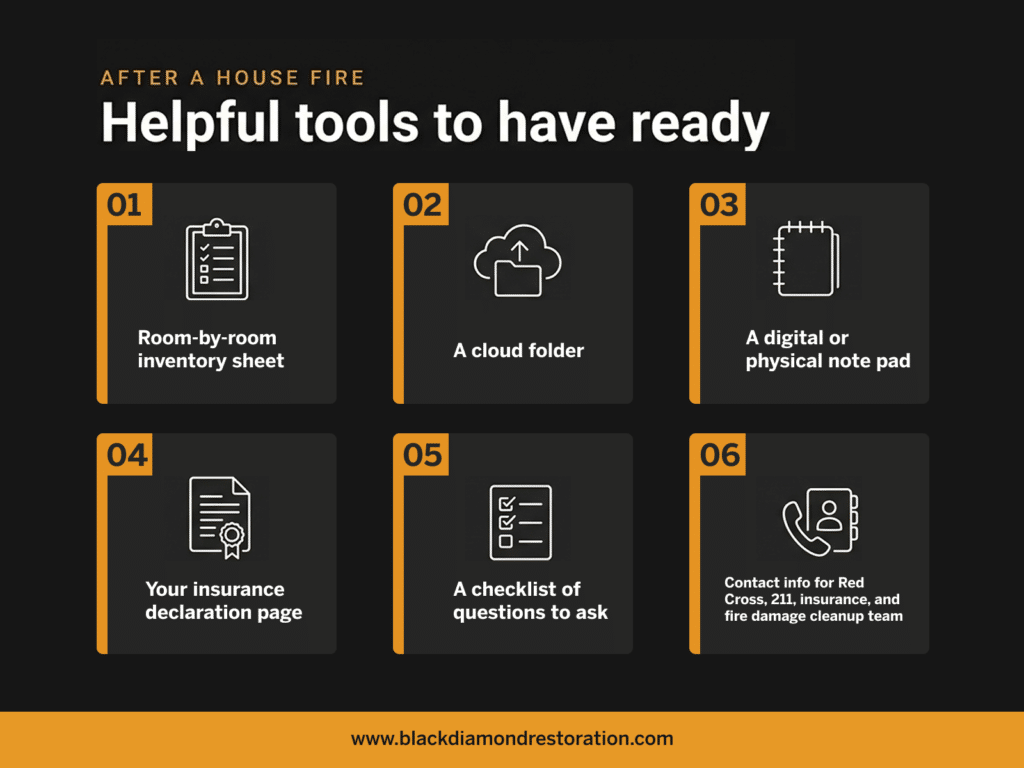
These tools and habits make post-fire financial recovery easier:
- A room-by-room inventory sheet for damaged property
- A cloud folder for photos, receipts, and claim documents
- A notebook (or notes on your phone) with every call, date, and claim number
- A copy of your insurance declarations page
- A checklist for questions to ask a fire damage repair company
- A folder (digital or physical) for hotel, food, and transportation receipts tied to displacement
- Contact info for Red Cross, 211, your insurer, and your chosen fire damage cleanup team
FAQ
What to do if you lose everything in a house fire?
Start with safety first, then focus on the basics. Call your insurance company right away, ask about temporary housing and additional living expenses, and save every receipt tied to the fire. Contact the Red Cross, The Salvation Army, or 211 for help with shelter, food, clothing, and local recovery resources. If the fire is part of a declared disaster, FEMA or SBA assistance may also be available.
What is salvageable after a house fire?
It depends on how severe the fire was, how far the smoke and soot spread, and how quickly cleanup begins. A professional assessment gives you the safest way to decide what you can save and what you should remove.
What is the first financial step to take after a house fire?
Contact your insurance company right away, document the damage with photos and lists, and start saving every receipt tied to emergency costs. That step supports both your claim and any later requests for aid or reimbursement.
Does homeowners’ insurance cover temporary housing after a fire?
Often, yes. Many homeowner’s policies include additional living expense coverage when a covered fire makes the home uninhabitable. That benefit may help with hotel stays, rentals, meals, storage, and related costs.
Need trusted help after a fire? Call Black Diamond Restoration
Recovering after a fire takes more than cleanup alone. Smoke, soot, odor, and hidden structural damage may continue affecting your home or business long after the flames are out. That is why fast, professional fire damage restoration matters.
Black Diamond Restoration provides expert care from start to finish, including assessment, fire damage cleanup, repairs, and full restoration support. When you need a dependable fire damage repair company, our team is ready to respond with urgency, experience, and trusted service. Call Black Diamond Restoration now to request your free damage assessment.