Leak damage most often starts with plumbing failures, aging water heaters, worn appliance hoses, roof and flashing problems, frozen pipes, poor exterior drainage, and failing bathroom seals. To prevent leaks, inspect visible plumbing regularly, proactively replace aging hoses and water heaters, insulate pipes before winter, and keep gutters and downspouts clear year-round.
Most leaks start quietly via a drip under the sink, a stain on the ceiling, or a musty basement smell. By the time you notice, water has been at work for weeks. For Utah homeowners, freeze–thaw cycles, spring snowmelt, and summer storms make leaks especially common.
In this guide, you’ll learn the seven most common causes of leaks, how to prevent them before they start, and when to call in professional restoration services rather than waiting for a small problem to become a major one.
What is leak damage?
Leak damage is the harm water causes when it escapes your plumbing, roofing, or drainage systems and reaches materials it shouldn’t, including drywall, flooring, insulation, framing, and personal belongings. Unlike sudden flooding, it often builds slowly, making it more likely to cause hidden rot, mold growth, and structural weakening before anyone notices.
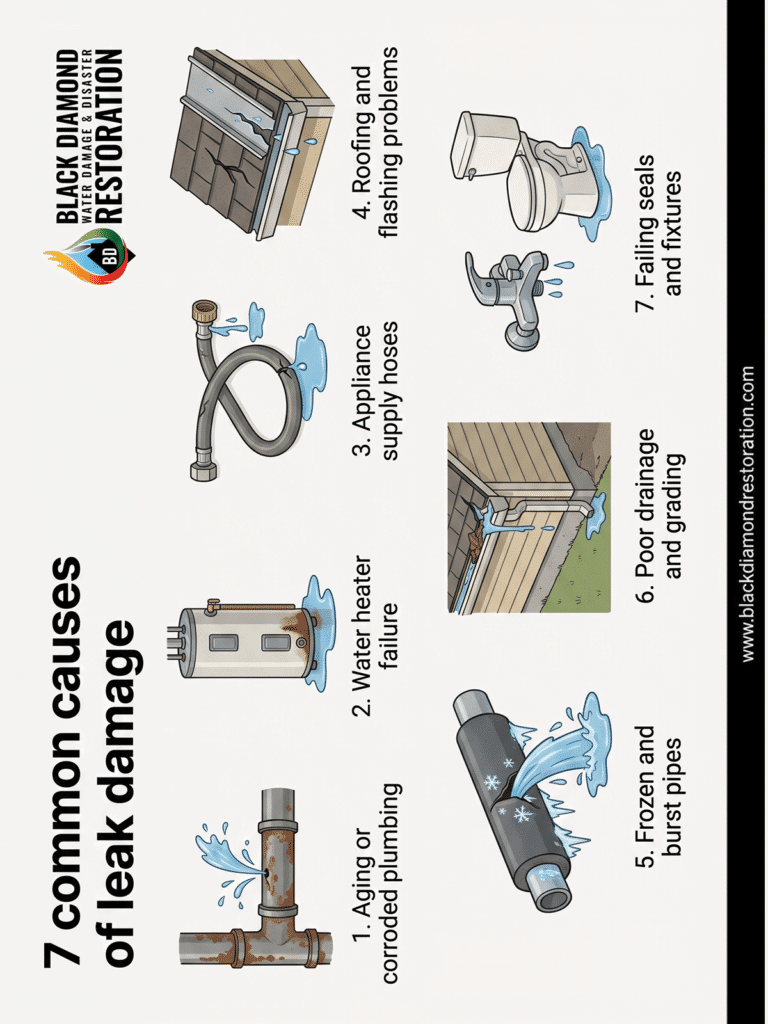
7 common causes of leak damage
1. Aging or corroded plumbing
Supply lines, joints, and fittings wear out over time. Older Utah homes with galvanized steel pipes are especially prone to corrosion, which can eventually form pinholes and cause drips inside walls.
2. Water heater failure
Most tank water heaters last eight to 12 years. Corrosion starts inside, where you can’t see it, and a failed tank can release 40–50 gallons and keep feeding water until the supply is shut off.
3. Appliance supply hoses
Washing machine, dishwasher, and ice maker lines are frequent culprits. Rubber hoses harden, crack, and burst, often while no one is home to catch it.
4. Roof and flashing problems
Missing shingles, cracked flashing around chimneys and vents, and clogged gutters allow water to run under the roofline. After heavy weather, roof leaks and the need for storm damage cleanup often go hand in hand.
5. Frozen and burst pipes
Pipes in exterior walls, garages, crawl spaces, and unheated basements can freeze during Utah cold snaps. The real damage happens when they thaw.
6. Poor drainage and grading
Downspouts dump water at the foundation, soil slopes toward the house, and flooded window wells push water into basements, especially during spring runoff.
7. Failing seals and fixtures
Worn toilet wax rings, degraded caulk, and cracked grout let small amounts of water into subfloors and wall cavities every day, causing some of the sneakiest water damage in the home.
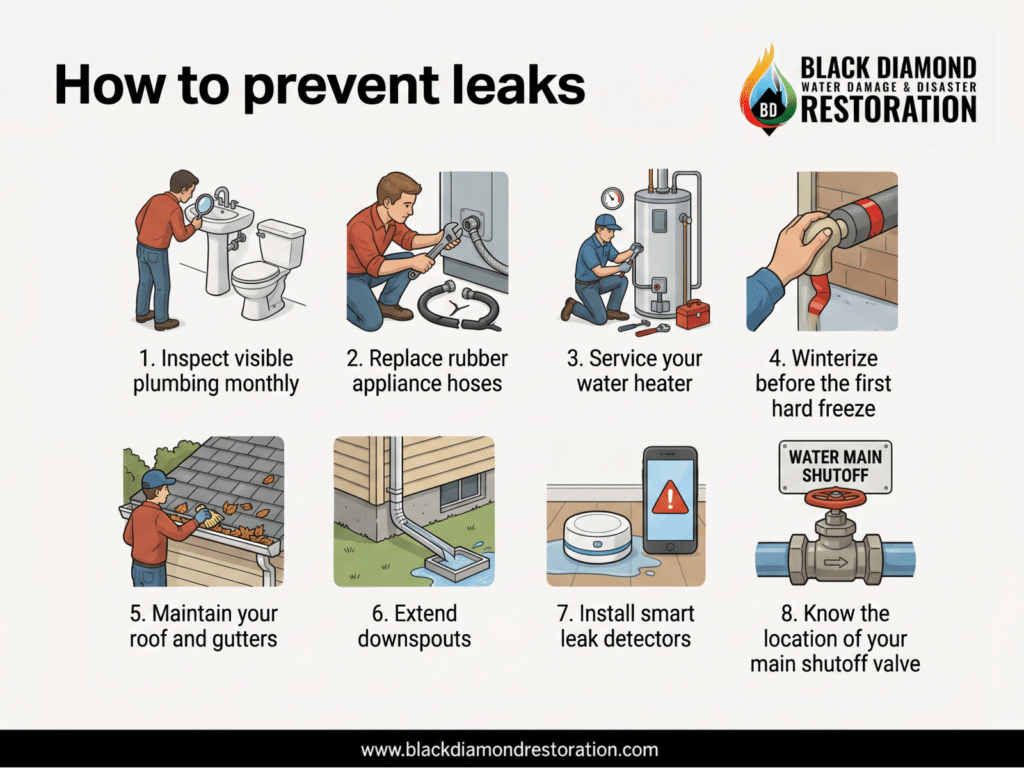
How to prevent leaks
- Inspect visible plumbing monthly. Check under sinks, behind toilets, and around appliances for moisture, corrosion, or staining.
- Replace rubber appliance hoses. Upgrade to braided stainless-steel hoses and replace them every 5 years.
- Service your water heater. Flush sediment annually and plan replacement near the 10-year mark, rather than waiting for failure.
- Winterize before the first hard freeze. Insulate exposed pipes, disconnect garden hoses, and keep your home above 55°F, even when you’re traveling.
- Maintain your roof and gutters. Clear gutters each fall and spring, and inspect shingles and flashing after major storms.
- Extend downspouts. Direct water at least four to six feet away from the foundation.
- Install smart leak detectors. Place sensors near the water heater, washer, and under sinks; auto-shutoff models can stop a burst line in seconds.
- Know the location of your main shutoff valve. When a pipe fails, minutes matter.
Real-life example of a Utah home
A Davis County homeowner noticed a faint musty odor in a basement bedroom, but found no visible water. A moisture inspection traced it to a pinhole leak in a copper line inside the wall, likely aggravated by winter pressure fluctuations.
Because the leak had run for weeks, drywall and carpet pad had to be removed and dried. Professional restoration services caught it before it reached the framing, but a leak detector would have dramatically reduced the cost.
Why leak prevention matters
Preventing leaks is far cheaper than repairing what they leave behind. A few minutes of routine maintenance each month protects your home, budget, and peace of mind. Here’s what consistent leak prevention does for Utah homeowners:
- Reduces the need for emergency restoration services and insurance claims
- Stops mold growth before it starts
- Protects flooring, drywall, and structural framing
- Reduces wasted water and lowers utility bills
- Preserves your home’s value and insurability
- Limits the disruption of demolition and drying work
Common mistakes homeowners make
Even diligent homeowners make missteps that turn small leaks into major damage. Most of these mistakes come down to waiting too long or treating the symptom instead of the source. Avoid these common pitfalls:
- Ignoring small drips or stains because they seem minor
- Waiting for a water heater to fail instead of replacing it proactively
- Leaving hoses connected to outdoor spigots through winter
- Skipping gutter cleaning until water is already overflowing
- Painting over water stains without finding the source
- Assuming a dry surface means the leak has stopped
Key leak statistics
- Household leaks can waste nearly 10,000 gallons of water per year, according to the EPA’s WaterSense program.
- Nationwide, household leaks waste roughly 1 trillion gallons of water annually (EPA).
Recommended tools and products
- Smart leak detection sensors (with auto-shutoff)
- Braided stainless steel appliance hoses
- Foam pipe insulation sleeves
- Water pressure gauge (target 45–55 psi)
- Gutter guards and downspout extensions
- Moisture meter for spot-checking suspect areas
FAQ
How do I know if I have a hidden leak?
Watch for musty odors, unexplained increases in water bills, warped flooring, peeling paint, or stains on ceilings and walls. A moisture meter or professional inspection can confirm what’s happening behind surfaces.
When should I call water damage repair services?
Call professionals when water has reached drywall, flooring, or insulation, when the source is hidden, or when moisture has been present for more than 24–48 hours, as this is the window when mold growth typically begins.
How can I prevent leaks in winter?
Insulate exposed pipes, disconnect and drain outdoor hoses, seal foundation air gaps, and keep indoor temperatures above 55°F during cold snaps and vacations.
What are the most common causes of leaks?
The most common causes of leaks are aging or corroded plumbing, water heater failure, worn appliance hoses, roof and flashing damage, frozen pipes, poor exterior drainage, and failing seals around toilets and showers. In Utah, freeze–thaw cycles and spring snowmelt make several of these seasonal risks.
How can leaks be prevented?
Prevent leaks by taking the following steps:
- Inspect visible plumbing monthly
- Replace rubber appliance hoses with braided stainless steel
- Flush the water heater annually
- Insulate exposed pipes before winter
- Keep gutters clear with downspouts extended from the foundation
- Install smart leak detectors with automatic shut-off near high-risk appliances
How leak prevention works in Utah
Utah’s climate creates leak risks on a schedule.
Winter freeze–thaw cycles stress pipes and create ice dams that force meltwater under shingles.
Spring snowmelt saturates soil and tests basement drainage.
Summer monsoon storms overwhelm gutters, sometimes leaving homeowners needing roof repairs and storm damage cleanup at once.
Along the Wasatch Front, hard water also accelerates the wear on fixtures and valves. Matching your routine to the season keeps you ahead of the damage.
Don’t let a leak become a disaster. Call Black Diamond Restoration.
If you’ve spotted a leak, a stain, or a musty smell in your home, don’t wait for the damage to spread. Black Diamond Restoration is Utah’s trusted team for all your leak restoration needs. We’re available 24/7 across the Wasatch Front with rapid response, advanced moisture detection, and complete water damage repair services from cleanup through full reconstruction.
Contact Black Diamond Restoration today, and get expert help before a small leak becomes a big problem.