Unattended cooking is the number one cause of home cooking fires nationwide, and Thanksgiving sees a sharp spike compared to an ordinary weeknight.
Part of the problem is volume.
A stovetop juggling gravy and side dishes at the same time as an oven roasting a turkey for hours creates far more opportunities for something to go wrong than a typical dinner.
Add relatives in and out of the kitchen, kids underfoot, and hosts trying to time everything to land on the table at once, and small lapses in attention become much more likely.
Grease fire safety deserves special attention this time of year because so much Thanksgiving cooking involves oil at high heat, whether that’s pan-frying, sautéing, or deep-frying a turkey outdoors.
A grease fire can go from a shimmer of smoke to flames reaching the cabinets in a matter of seconds, which is why prevention matters more than knowing how to react after the fact.
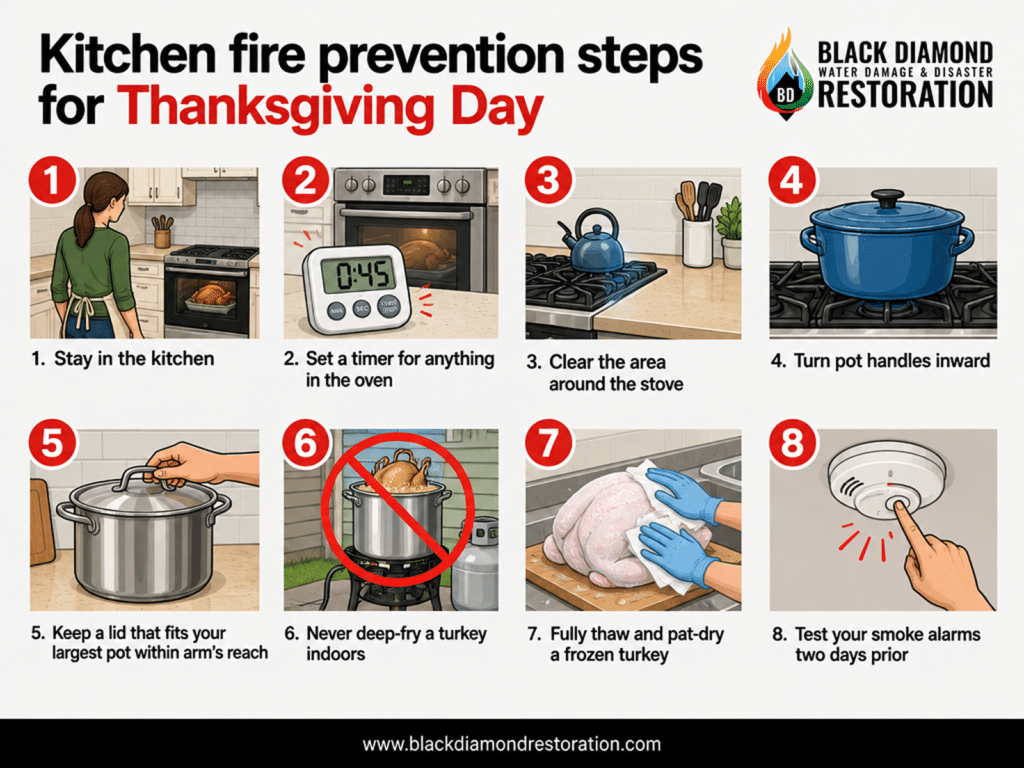
Kitchen fire prevention steps for Thanksgiving Day
Good kitchen fire prevention doesn’t require anything elaborate. A few habits, practiced consistently through the day, cover most of the risk:
- Stay in the kitchen. If you’re frying, grilling, boiling, or broiling, don’t leave the room. If you have to step away, turn off the burner first.
- Set a timer for anything in the oven. It’s easy to lose track of time with guests around; a timer on your phone is a simple backstop.
- Clear the area around the stove. Oven mitts, dish towels, wooden utensils, and food packaging should stay at least three feet from any burner.
- Turn pot handles inward. This keeps them from being bumped or grabbed by a curious kid weaving through the kitchen.
- Keep a lid that fits your largest pan within arm’s reach. It’s the fastest way to smother a stovetop flare-up.
- Never deep-fry a turkey indoors, in a garage, or on a covered porch. Turkey fryers cause a disproportionate share of Thanksgiving cooking fire incidents, and they belong outside, away from the house, on a flat and stable surface.
- Make sure a frozen turkey is fully thawed and patted dry before frying. Water hitting hot oil is what causes the violent flare-ups associated with fryer accidents.
- Test your smoke alarms a day or two ahead of time, not the morning of, so there’s time to swap batteries if needed.
What to do if a grease fire starts
Grease fire safety hinges on a fast, correct first move. Turn off the burner immediately, then slide a metal lid over the pan to cut off its oxygen supply. Leave the pan covered and undisturbed until it’s fully cooled.
Baking soda can help smother a very small flame if a lid isn’t within reach, but it takes a large quantity to work on anything beyond a light flare-up, so don’t count on it as a primary plan.
Never pour water on a grease fire. Water is denser than hot oil, so it sinks beneath the surface and flash-vaporizes, launching burning oil outward and igniting anything or anyone standing nearby. Also, avoid carrying the pan to the sink or outside; walking across the kitchen with an open flame risks spreading it to new surfaces.
Good grease fire safety also means knowing when to stop trying to handle it yourself. If the fire outgrows the pan or doesn’t die down within a few seconds of being covered, that’s your signal to leave it alone. Get everyone out of the house and call 911 from outside, leaving the door closed behind you.
After a Thanksgiving cooking fire: what homeowners often miss
Even a small, quickly contained kitchen fire usually does more damage than homeowners expect.
Smoke residue travels through the HVAC system and settles on cabinetry, fabric, and drywall well beyond the immediate area of the flames. The chemical byproducts of a grease fire, in particular, can etch countertops and discolor surfaces if not addressed quickly. Fire extinguisher residue is also corrosive and needs to be cleaned promptly to prevent further damage to appliances and finishes.
This is where kitchen fire damage cleanup becomes a separate project from simply airing out the room. A professional assessment can catch smoke penetration in places a homeowner wouldn’t think to check, such as inside cabinet boxes or behind range hoods, before it turns into a lingering odor or a hidden corrosion problem.
A Wasatch Front consideration
Many homes along the Wasatch Front were built with older electrical panels and kitchens that predate today’s appliance loads, which matters when a house is suddenly running a second oven, an extra slow cooker, and warming trays all at once on Thanksgiving.
Overloading a single circuit with holiday cooking equipment is a less-discussed fire risk, but a real one in older housing stock in Salt Lake County and Utah County. Checking your panel’s capacity before adding extra appliances is a simple step that’s easy to overlook amid the rest of the holiday prep.
Frequently asked questions
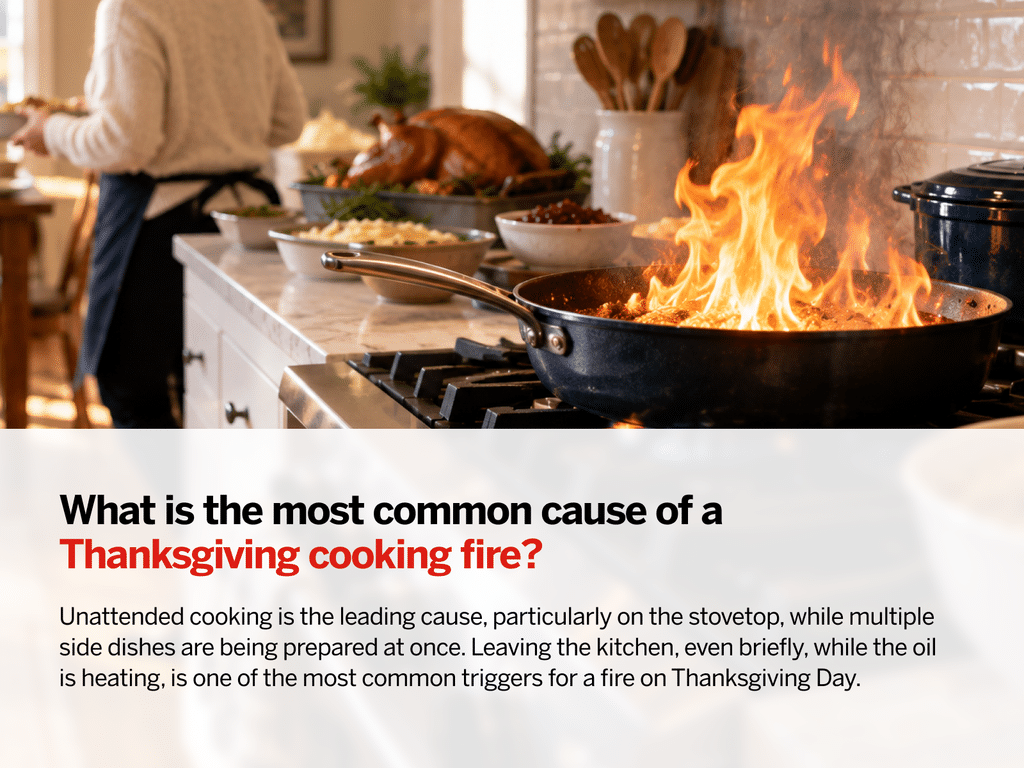
Q: What is the most common cause of a Thanksgiving cooking fire?
Unattended cooking is the leading cause, particularly on the stovetop, while multiple side dishes are being prepared at once. Leaving the kitchen, even briefly, while the oil is heating, is one of the most common triggers for a fire on Thanksgiving Day.
Q: Is it safe to deep fry a turkey indoors?
No. Turkey fryers should only be used outdoors, far from the home, on a flat surface away from anything flammable. Indoor or garage use significantly raises the risk of a serious fire due to oil splatter and open flame.
Q: How do I put out a grease fire on the stove?
First, turn off the heat. Second, slide a metal lid over the pan. Finally, leave it covered until completely cool. Never use water, and never try to move the pan while it’s on fire.
Q: What should I do if smoke or fire damage happens in my kitchen?
Ventilate the area once it’s safe, avoid using affected appliances or countertops until they’ve been inspected, and contact a restoration professional to assess smoke penetration beyond what’s visible on the surface.
Protect your home this Thanksgiving with Black Diamond Restoration
A few simple habits are usually enough to keep a Thanksgiving kitchen fire from happening in the first place. But if the worst does happen, Black Diamond Restoration is available around the clock to help Wasatch Front homeowners recover quickly and thoroughly from fire and smoke damage. Contact us anytime for emergency response and a full damage assessment.