When the first hard freeze hits the Wasatch Front, furnaces that sat idle all summer roar back to life, and so do the problems nobody checked on. Dust scorches and filters clog, while wiring that has quietly worn down gets pushed to its limit. Understanding furnace fire hazards before the cold sets in is the simplest way to protect your family and your property.
In this guide, you’ll learn which heating fire hazards cause the most damage and which mistakes homeowners make most often. We’ll also cover what to do if a fire does happen, including when to call for fire damage restoration.
What are furnace and heating fire hazards?
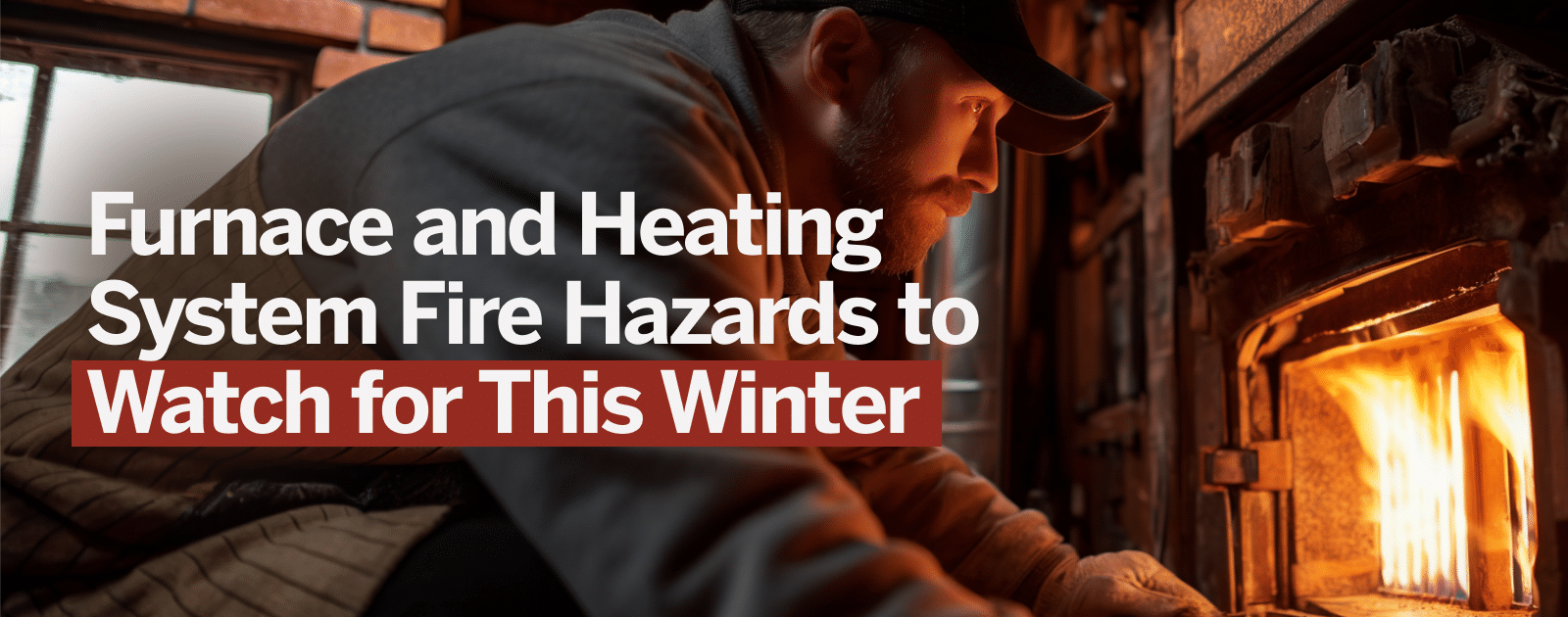
Furnace fire hazards may cause a heating system to overheat or ignite nearby materials. They range from mechanical failures inside the unit to storage habits that put flammable items too close to the burner. Broader heating fire hazards also include space heaters, fireplaces, wood stoves, and baseboard units.
Heating equipment is consistently a leading cause of home fires, and the risk peaks from December through February. Deferred maintenance often causes these fires, while blocked airflow and improper equipment use also raise the risk.
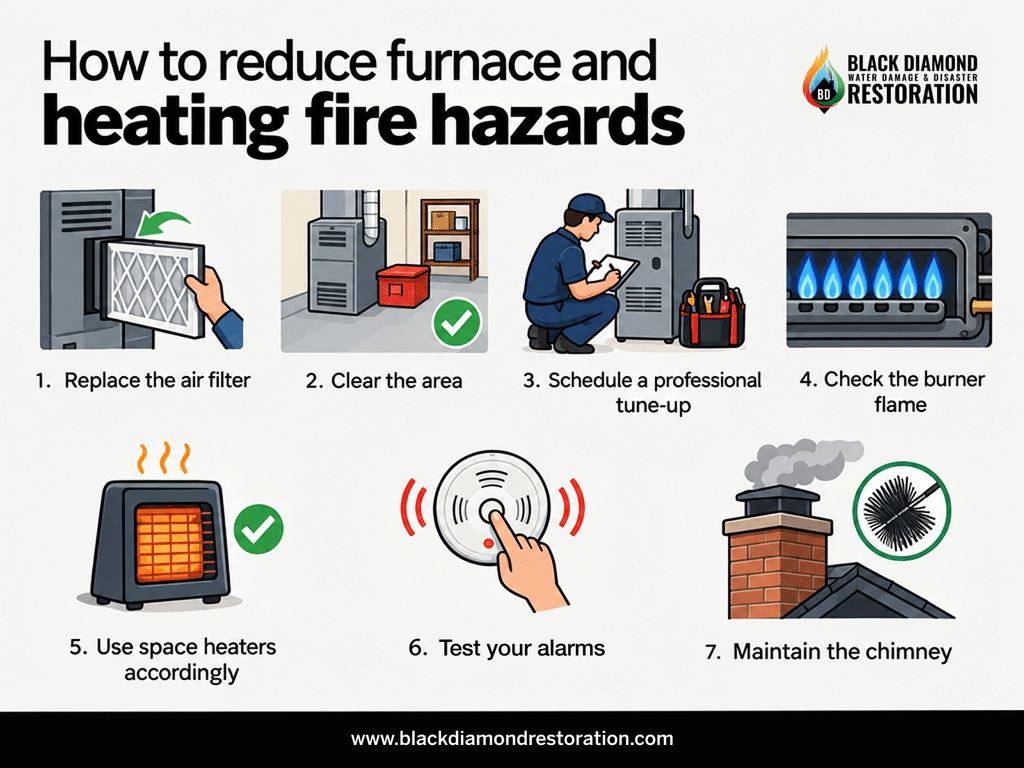
How to reduce furnace and heating fire hazards
Following these steps is the most direct way to keep heating fire hazards under control.
- Replace the air filter. Check it monthly and swap it every one to three months so airflow stays strong.
- Clear the area. Keep at least three feet of open space around the furnace and water heater.
- Schedule a professional tune-up. A licensed technician can spot worn wiring and ignition problems before the first cold snap.
- Check the burner flame. Steady blue is normal; yellow or flickering flames signal incomplete combustion and need prompt service.
- Use space heaters correctly. Plug them directly into a wall outlet and keep them at least three feet from anything flammable. Turn them off before you sleep.
- Test your alarms. Press the test button on smoke and carbon monoxide alarms every month and replace dead batteries.
- Maintain the chimney. Burn seasoned wood only and have the flue swept annually to remove creosote.
Why paying attention matters
A little attention before winter pays off in several ways:
- Lower risk of fire and carbon monoxide exposure
- Lower energy bills from a clean, efficient system
- Fewer emergency repairs during January cold snaps
- A longer furnace lifespan that delays a costly replacement
- Protection for your warranty and insurance standing
- Avoiding fire damage restoration costs that dwarf the price of a tune-up
Mistakes homeowners should avoid
Most furnace fire hazards come from a short list of avoidable errors:
- Skipping the annual inspection until something breaks
- Ignoring a dirty filter for months at a time
- Storing paint and cardboard next to the furnace
- Plugging space heaters into extension cords
- Leaving space heaters on overnight
- Dismissing burning smells or yellow flames
- Disposing of fireplace ashes in paper or plastic
Key heating safety stats
- Heating equipment ranks among the leading causes of U.S. home fires, according to the National Fire Protection Association (NFPA).
- Heating-related fires peak during the coldest months of the year.
- Portable space heaters account for a disproportionate share of heating-related fire deaths.
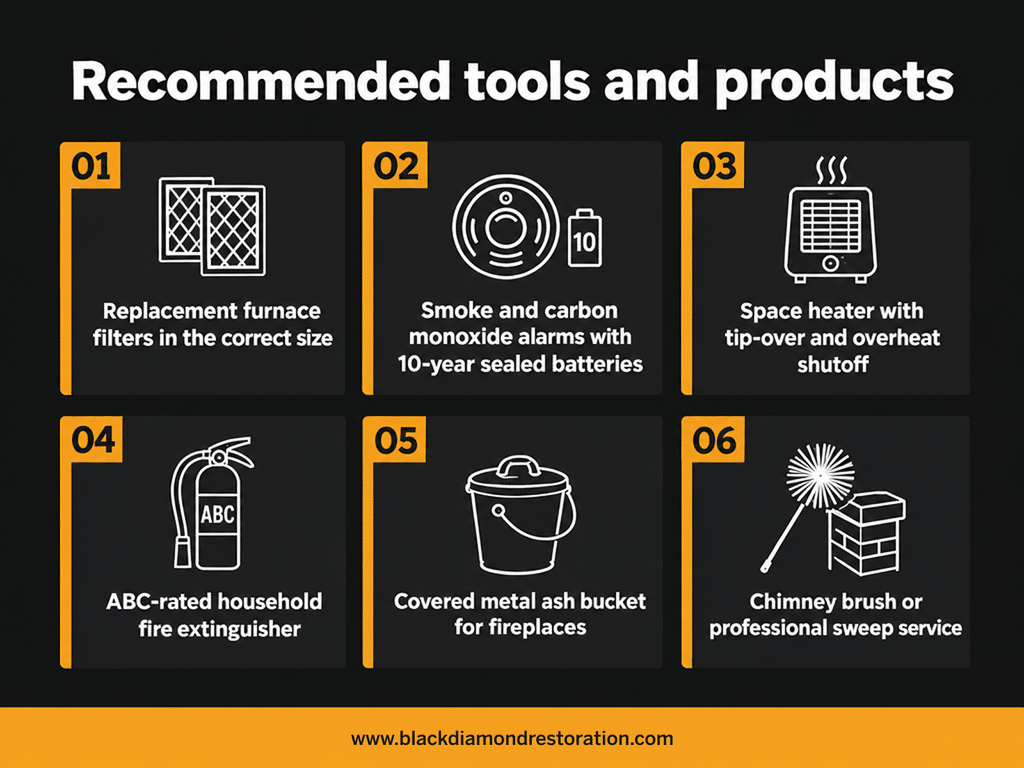
Recommended tools and products
- Replacement furnace filters in the correct size
- Smoke and carbon monoxide alarms with 10-year sealed batteries
- Space heater with tip-over and overheat shutoff
- ABC-rated household fire extinguisher
- Covered metal ash bucket for fireplaces
- Chimney brush or professional sweep service
FAQ
How often should I have my furnace inspected?
Have a licensed technician inspect your furnace once a year, ideally in early fall before the heating season begins. An annual visit catches worn components and venting problems early, which keeps the system efficient and sharply lowers the chance of a fire or carbon monoxide leak.
Why does my furnace smell like burning when I turn it on?
A brief burning smell at the first startup of the season is usually dust burning off the heat exchanger and burners. It should fade within an hour or so. If the odor is strong or smells electrical, shut the system off and call a technician immediately.
How close can items be to a furnace?
Keep at least three feet of clear space around the furnace and any other heat source. Never store paint or gasoline nearby, since their vapors can ignite from a pilot light or burner. Boxes and laundry should stay out of that zone as well.
What should I do after a furnace fire?
Get everyone outside and call 911. Once firefighters clear the home, avoid running the HVAC system or wiping soot, since both can spread residue. Contact a professional for fire damage restoration and fire and smoke damage repair as soon as possible.
How does winter affect Utah residents’ furnaces and heating?
Utah winters bring long stretches of subfreezing nights, so furnaces along the Wasatch Front run hard from November through March. Inversion days keep homeowners indoors with heating on for extended periods, and older homes in established neighborhoods often have aging equipment and tight utility closets.
These conditions raise the odds that heating fire hazards go unnoticed. If a fire does occur, prompt fire and smoke damage repair limits how far soot and odor spread.
Need help after a heating fire? Call Black Diamond Restoration
A furnace or heater fire is stressful enough without having to wonder who to trust for the cleanup. Black Diamond Restoration helps Utah families get back to normal, from the first emergency call through the final repairs. Our technicians handle fire and smoke damage, water damage from firefighting or burst pipes, mold, and odor removal, so one phone call covers whatever your home needs.
Don’t let soot and moisture settle deeper into your walls and ductwork. Call Black Diamond Restoration at 801.823.4785 or request a free assessment today. We’ll work directly with your insurance company to keep the process as simple as possible.