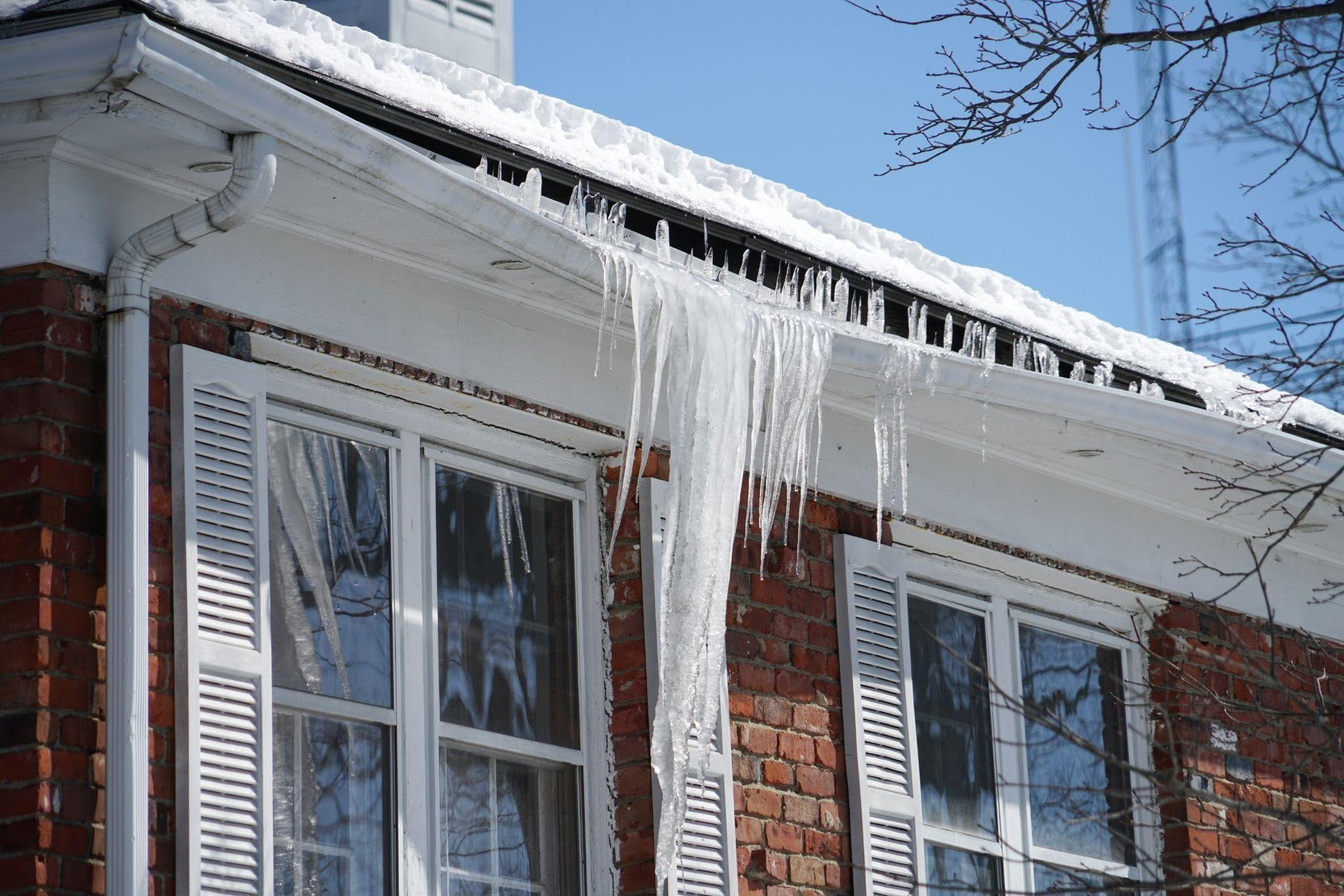
Ice dams are among the most common reasons Utah roofs leak in winter, and the cause usually lies in the attic rather than on the roof itself. Heat from the house melts the snow above it, and the runoff refreezes as it reaches the cold edge of the roof.
That ridge of ice holds the next round of meltwater in place until it backs up under the shingles. From there, water can soak the roof deck and the insulation below it, and the first sign is often a stain on the ceiling.
Below, you’ll find how to stop the cycle with air sealing and insulation, along with advice on when a leak is serious enough to call water damage repair services. Most of the fixes are simple, and they work best when you make them before the next storm.
What is an ice dam, and why does one form?
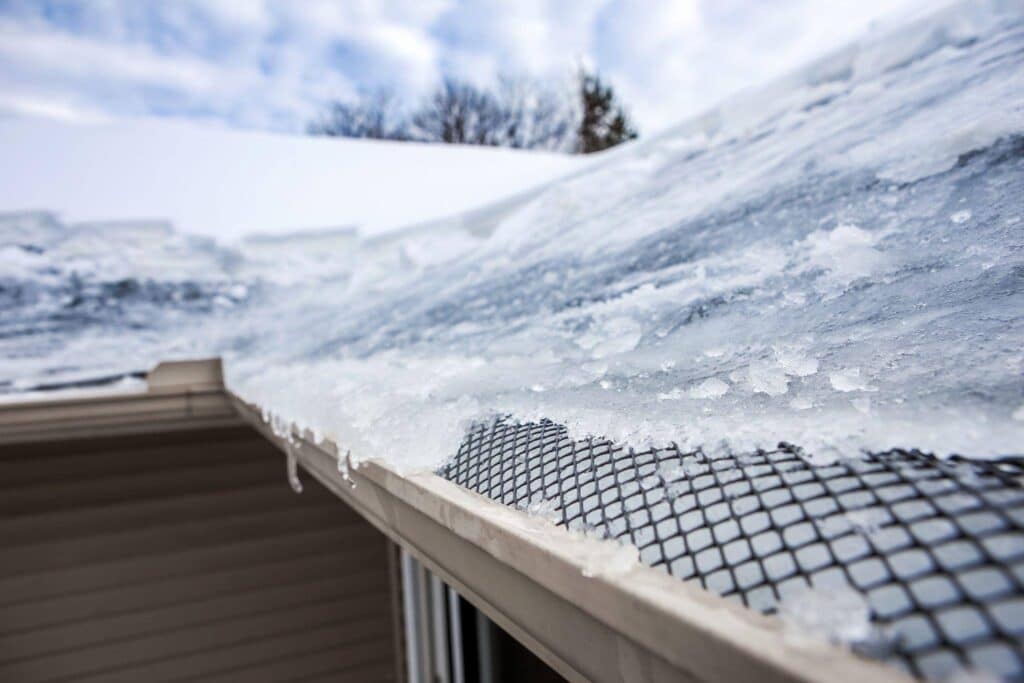
An ice dam is a ridge of ice that builds along the lower edge of a sloped roof. It blocks meltwater from reaching the gutters, so water pools behind it and creeps under the shingles. From there, it can soak the roof deck and run down inside the walls.
The cycle starts in the attic. Warm air from the living space leaks upward, heating the roof deck. Snow over that warm patch melts, and the water slides toward the eaves. Nothing warms the overhang from below, so the water refreezes there. Layer by layer, the ridge grows.
Step-by-step ice dam prevention guide
Follow these steps in order, since sealing leaks matters more than adding material on top of them.
- Find the heat leaks. On a cold day, look for frost on the roof deck and gaps around the attic hatch.
- Air seal the attic floor. Close gaps around recessed lights, wire and pipe penetrations, the attic hatch, and chimney chases using expanding foam or fire-rated sealant.
- Add insulation. Aim for R-49 to R-60 across the attic floor, reaching the exterior wall line.
- Keep the eaves open. Install baffles so insulation never blocks the soffit vents.
- Ventilate the roof. Pair continuous soffit vents with a ridge vent so cold air flows under the deck.
- Exhaust moisture outdoors. Route bath fans and kitchen hoods outside, never into the attic.
- Clear snow after storms. Use a roof rake from the ground to pull snow off the lowest few feet.
Why preventing roof ice matters
- Avoids leaks that stain ceilings and soak insulation
- Protects shingles and gutters from the weight of heavy ice
- Lowers heating costs by keeping warm air in the living space
- Reduces mold risk inside walls and attic
- Cuts the chance you’ll need restoration services after a leak
Mistakes homeowners should avoid
- Chipping at ice with a hammer or axe, which damages shingles
- Spreading rock salt, which can corrode metal and harm plants
- Relying on heat cables without fixing the attic
- Adding insulation before sealing air leaks
- Waiting to call water damage repair services after a ceiling stain appears
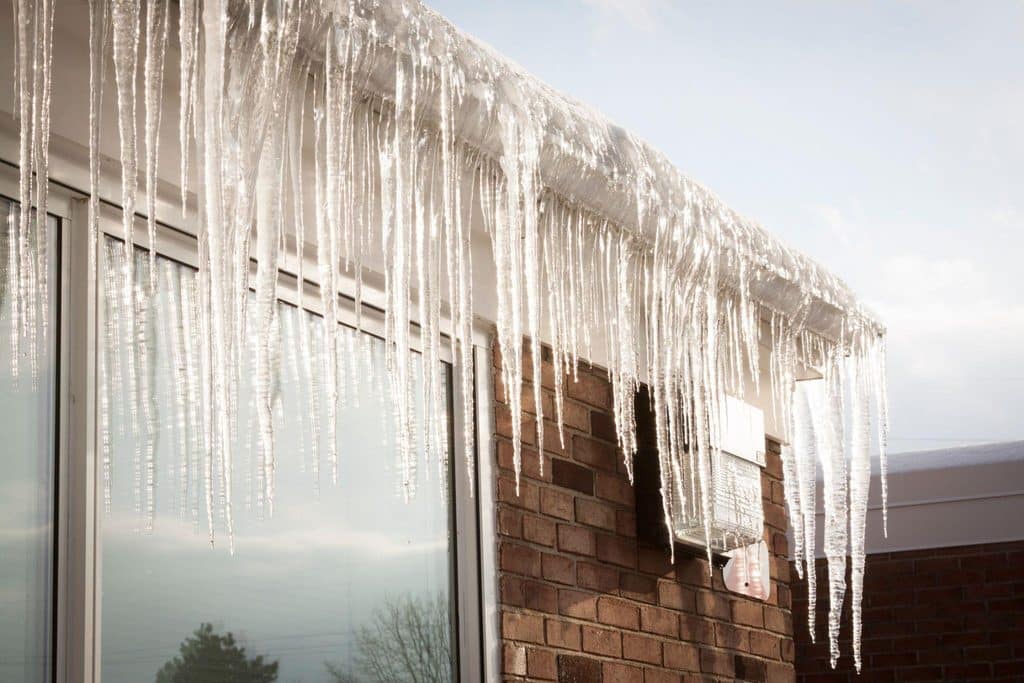
Key ice dam facts and figures
- Water freezes at 32°F
- Cold-climate attics are generally advised to reach R-49 to R-60.
- Building codes in snowy regions commonly require a waterproof membrane to extend at least 24 inches into the exterior wall line.
- A roof rake typically needs to clear only the lowest three to four feet of snow.
Recommended tools and products
- Long-handled roof rake
- Expanding foam and fire-rated sealant
- Rafter baffles for soffit airflow
- Calcium chloride ice melt (not rock salt)
- Home energy audit with an infrared camera
- Self-adhesive ice and water membrane for re-roofing
FAQ
Q: Can an ice dam damage my roof?
Yes. Standing meltwater may seep under the shingles and soak the attic insulation, leading to leaks and mold. The weight of heavy ice will also pull gutters loose. Catching the problem early keeps repairs small, and a roofer can check whether any shingles lifted.
Q: Is it safe to remove an ice dam myself?
Only from the ground. Never climb an icy roof or chip at the ice, because falls and shingle damage are real risks. A roof rake clears loose snow, while a professional with a steamer can safely remove a large amount of snow.
Q: What should I do if water is already leaking inside?
Catch drips with buckets and move belongings out of the way. Photograph the damage for your insurer, then call water damage repair services right away. Wet insulation and drywall will start to grow mold within 24 to 48 hours. Stay out of any room with a sagging ceiling.
Q: Do heat cables stop ice from forming?
Not reliably. Heat cables can open a drainage channel through existing ice, but they use electricity and treat only the symptom. Fixing air leaks and insulation gaps solves the root cause: heat escaping. Think of cables as a backup, not a cure.
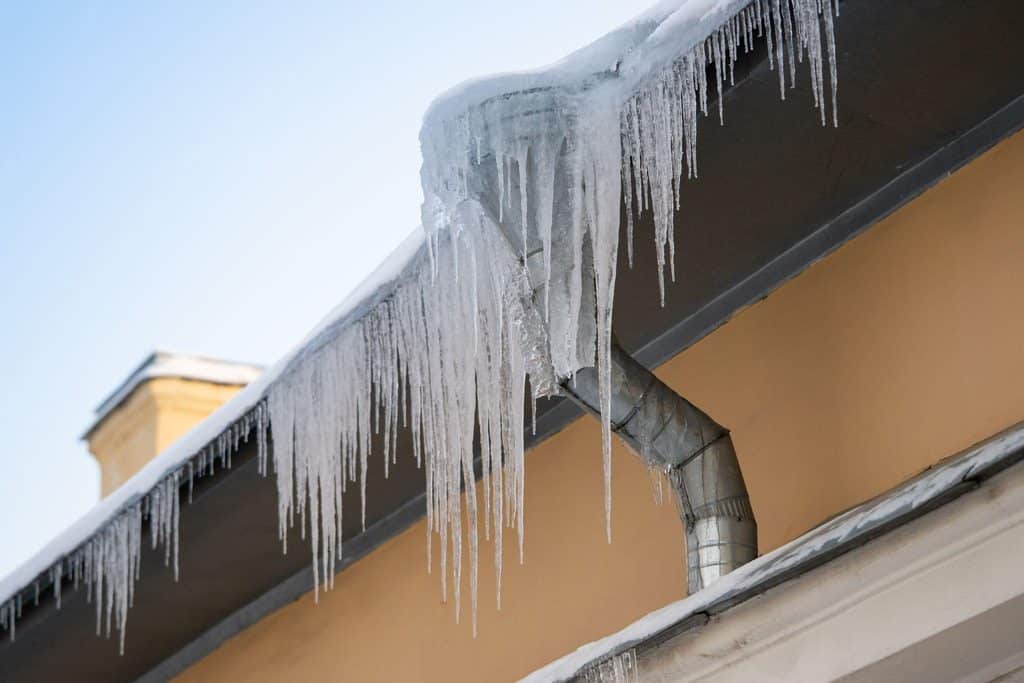
How ice dams form in Utah
Utah’s winters set up the exact conditions that cause roof ice. Cold nights paired with sunny afternoons create daily melt-and-refreeze cycles, and heavy snowpack in the Wasatch benches and mountain towns gives those cycles plenty of material.
Older homes and houses with complex rooflines feel it most. Inspect your attic in the fall, before the first big storm, and if winter wins anyway, local restoration services can reverse the damage.
Get restoration services from Black Diamond Restoration
Roof ice is a heat problem, not a snow problem. When warm air stops leaking into the attic, and the insulation is thick enough to hold it back, the roof surface stays evenly cold, and ice dams lose the conditions they need to form. The best time to deal with it is early fall, before the first heavy storm, when you can work in the attic comfortably and see exactly where the heat is escaping.
If winter has already left you with ceiling stains or soggy insulation, don’t wait for spring, since trapped moisture can turn into mold quickly. Black Diamond Restoration is ready to help. Request a free inspection today.